Created by Jett Symon
Description
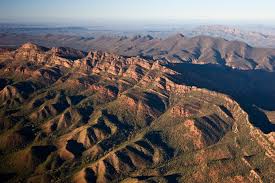
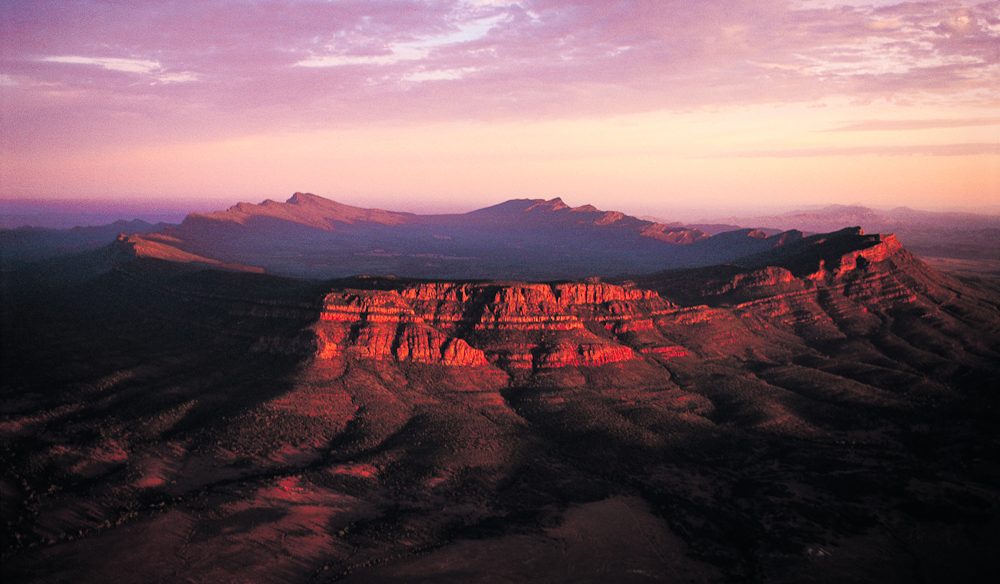
The Flinders Ranges is a group of mountains that stretch approximately 380 km from Port Pirie in the South of South Australia to Arkoola in the North. In 1802 Matthew Flinders discovered the ranges and they were then named after him. They are classified as a gorge and a mountain range. It is world renowned for its culture and history as well as its natural beauty. The Aboriginal people have lived in this area for thousands of years providing both cultural and historical value. The Aborigines believe it has a great spiritual value. The coordinates of Flinders Ranges are: (-31.416706, 138.749967)
Formation of the Flinders Ranges
The formation of the Flinders Ranges started approximately 800 million years ago. During this period extreme forces of nature lifted the entire east coast of Australia completely out of the sea creating a deep hollow area inland. Over the next many million years the sea flooded again this time leaving huge amounts of rocks, boulders and debris and left behind a broken and fractured landscape made up of deep gorges and the fossils of many sea creatures. The Wilpena Pound is a large sickle shaped natural amphitheatre that is approximately 80 square km in size and contains Flinders Ranges highest peak known as St Mary Peak. It was formed mainly of folded and faulted sediments. It's high walls are formed by Eponymous Pound Quartzite in a synclinal structure. The Flinders Ranges was formed about 800 million years ago. For about 300 million years this area was covered by the sea and various rocks were deposited. These rocks were crushed together and forced upwards forming large underwater mountains. When the water subsided they then became a group of mountains which is now known as the Flinders Ranges. The rocks of the Ranges are mostly quartzites, limestone, shales and sandstones.
Value of the Flinders Ranges
Aboriginal people:
The value to the Aboriginal people is in its heritage and culture. The local Aboriginal people are called the Adnyamathanha people which means the Rock or Hill people. They have been living there for thousands of years and holds great historical value. Generation after generation of the Adnyamathanha people have been using parts of the Flinders Ranges as meeting and gathering grounds. Each generation teaches the next generation how to protect and preserve the Flinders Ranges and its history and culture including song and dance, art and food.
Tourists:
The Tourists visit the Flinders Ranges because of the activities and its beautiful scenery. Some of the activities include four wheel driving, Bike riding, swimming and bush walking. The value that tourists receive is in the large options and choices that they can make to customize their holiday to whatever budget and experiences they desire. From scenic aeroplane flights showing some of Australias most incredible scenery to staying at Wilapena Resort in five star luxury hotel rooms. You can explore Wilpena Pound from the air, by four wheel drive or on foot. You can go on a guided tour which is lead by an Aboriginal person or guide yourself.
Many of the local restaurants cook unique meals using meats including Emu, Kangaroo, Goat and Camel to name a few. A must try for any tourist visiting the Flinders Ranges
Protection and Management
The Aboriginal people have had ongoing discussions with both state and federal governments and have successfully had parts of the Flinders Rangeschanged into National Parks to help protect its heritage, animals and plant life.
The Adnyamathanha people are teaching the next generation to understand the importance of the protection and the preservation of the Flinders Ranges so that it will be available to the future generations. The lessons from the past help the future so continuing in the traditions in art, cooking, language, culture handed down from each generation will help protect and maintain its future.
There are approximately 170,000 visitors per year who come to see the history and culture that the Aboriginal people have maintained at the Flinders Ranges for thousands of years.
The government is helping to protect the Flinders Ranges by funding a program to help manage the ongoing survival of the Flinders Ranges. The program is called Bounceback which is a major ecological restoration program within the Flinders Ranges. Bounceback established a series of targets to be achieved over the life of the program. This includes signs that the number of yellow-footed Rock-wallabies are increasing. It also aimed to reduce the number of pest species such as foxes and rabbits which are affecting the local animals and plants. Other activities Bounceback has implemented include:
- Feral goat control
- Fox control
- Rabbit Control
- Feral cat control
- Pest plant control
- Trial reintroduction of Brush-tailed Bettongs
- Buffer zone (reinvasion) management
- Vertebrate pest monitoring
- Revegetation trials
-
Vegetation community monitoring
- Threatened species/indicator monitoring
Please go back to top and click "Map and Location" for additional information and then finally please click onto the "Pictures" tab at the top of the page.
Thank you
© Copyright Flinders Ranges
